Methodology Must read
How the ALLYS Method Mobilizes Teams: An Insight into FlightRoom
Many team trainings fail because the content remains confined to the training room instead of transitioning into practice. The ALLYS method addresses this issue directly. It offers a framework that not only imparts knowledge but also genuinely changes behavior.
Developed by Lucian Katzbach, it is based on insights from aviation and high-risk medicine, utilizing simulations to help teams reflect within their natural work environment.
Why is this particularly important right now? In today's work environment, teams face a multitude of challenges. Diverse goals, unclear responsibilities, and a lack of psychological safety can lead to tensions.
These factors not only hinder productivity but can also cause lasting damage to team dynamics. The ALLYS method directly addresses these issues and provides a structured approach to resolving them.
The Logic of Game Mastery in Leadership
At first glance, comparing team leadership to the role of a Game Master in a pen-and-paper role-playing game might seem odd. Yet, this comparison is surprisingly fruitful. A good Game Master creates conditions where players can make decisions and experience the consequences of their actions.
Similarly, the ALLYS method designs conditions under which teams can act meaningfully without every decision being controlled from above.
This approach is particularly relevant because many leaders unconsciously tend to exert too much control. They give instructions and expect them to be followed without giving employees the space to make their own decisions.
This can lead to a culture of dependency and mistrust. The ALLYS method, on the other hand, promotes self-responsibility and strengthens trust within the team. By adopting the role of the Game Master, leaders allow team members to experience for themselves which decisions are possible and sensible.
What Defines the ALLYS Method?
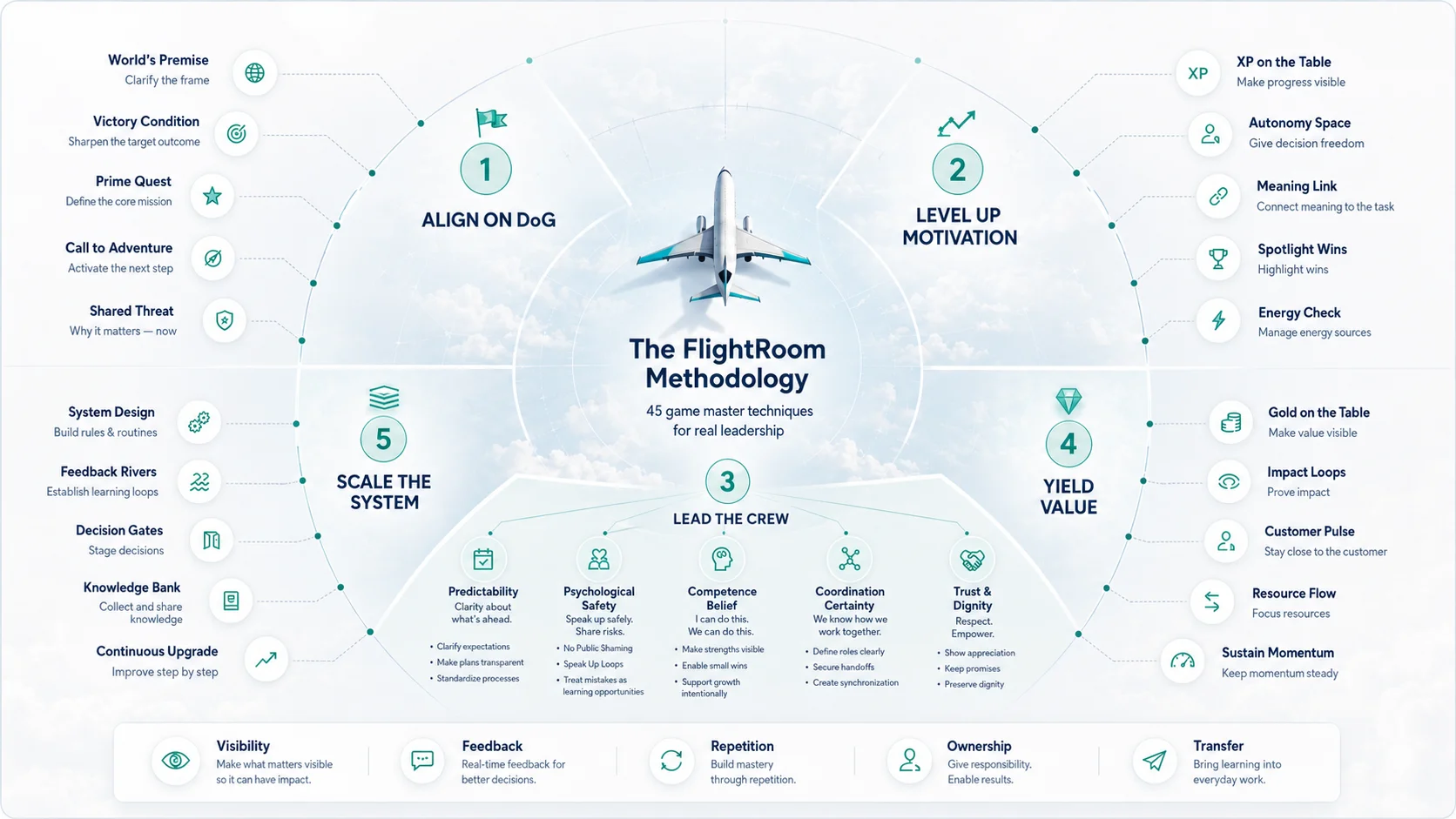
ALLYS stands for five steps that help teams act effectively. These steps are: Align on DoG, Level Up Motivation, Lead the Crew, Yield Value, and Scale the System. Each of these steps is equipped with nine techniques that are practical and directly applicable.
They help teams not only understand theoretically how they should work but also actually operate that way.
A central feature of the ALLYS method is its flexibility. It does not offer rigid rules but adaptable techniques tailored to the specific needs of a team. This allows for addressing various situations and challenges individually.
The method creates a framework in which teams can learn to organize themselves and find their own solutions. This not only promotes independence but also the creativity and innovative power of the teams.
Preparing for the Game: Align on DoG
Before a team can work effectively, it must know the world it operates in. The first step of the method, Align on DoG, ensures that all participants have a shared understanding of the goal they are pursuing and the rules of the game.
Techniques like The World’s Premise and The Victory Condition clarify what success means for the team and what does not.
The importance of this step cannot be underestimated. In many organizations, there are different ideas about what exactly should be achieved. A developer might believe that the highest quality is the goal, while the Product Owner focuses on speed and management has revenue in mind.
These discrepancies lead to conflicts and inefficient processes. Align on DoG gets everyone on the same page and creates the necessary clarity to work together towards a goal.
Igniting Motivation: Level Up Motivation
Clarity alone is not enough to get teams moving. Motivation is key, and this is where the second step, Level Up Motivation, comes into play. Through techniques like The Call to Adventure and XP on the Table, teams are encouraged to take initiative and make progress visible.
These techniques create an environment where people not only know what to do but also have the desire to do it.
A common problem in teams is the lack of visible progress. Teams often focus only on problems and outstanding tasks. This easily creates the feeling that no progress is being made, even though much has already been achieved.
Level Up Motivation ensures that successes are made visible and acknowledged. This motivates team members and strengthens their commitment to the common task. The method shows how important it is not only to focus on the end goal but also to celebrate the small successes along the way.
Leading the Crew: Lead the Crew
Lead the Crew forms the heart of the ALLYS method. Trust is the central element here. The Confidence Engine, consisting of predictability, psychological safety, a sense of competence, coordination security, and dignity, is strengthened by 25 specific techniques.
These help to foster trust within the team and create a safe environment where collaboration is possible.
Trust is a crucial factor for the success of teams. Without trust, employees hesitate to share their ideas or take risks. The ALLYS method places great emphasis on creating an environment where everyone feels safe to express their opinions and try new approaches.
Techniques like Telegraph the Road and The Edge of the Map help create predictability and give team members the security they need to act effectively. The method promotes a culture of mutual respect and collaboration.
Creating Value: Yield Value
Even the best team must ultimately be able to create value. Yield Value focuses on making the results achieved visible and measurable. Techniques like Gold on the Table and Pressure Valve help teams recognize the value they generate and regulate the pressures to ensure sustainable performance.
In modern knowledge work, it is often difficult to recognize the concrete value of one's work. Projects stretch over long periods, and the direct benefit is not always immediately visible. Yield Value addresses this issue and helps teams make their successes measurable.
By making the value achieved visible, the team is motivated and gains a clear picture of the difference their work actually makes. At the same time, the method ensures that the pressure to constantly perform at peak levels is regulated to avoid long-term exhaustion.
Scaling the System: Scale the System
The final step, Scale the System, ensures that changes are sustainable and not dependent on individual people. It is about designing the system so that it functions even without the constant presence of leaders.
Techniques like Decision Gates and Feedback Rivers contribute to teams working independently and resiliently. This turns a one-time change into a lasting improvement.
A common problem in organizations is the dependency on certain key individuals. When these people leave the company, the system often collapses. Scale the System creates structures that function independently of individuals.
This ensures the long-term stability of the organization and allows for flexible responses to changes. The ALLYS method promotes a culture of continuous improvement, where teams learn to organize themselves and constantly optimize their processes.