How a Medical Book Transformed My Perspective on Teamwork
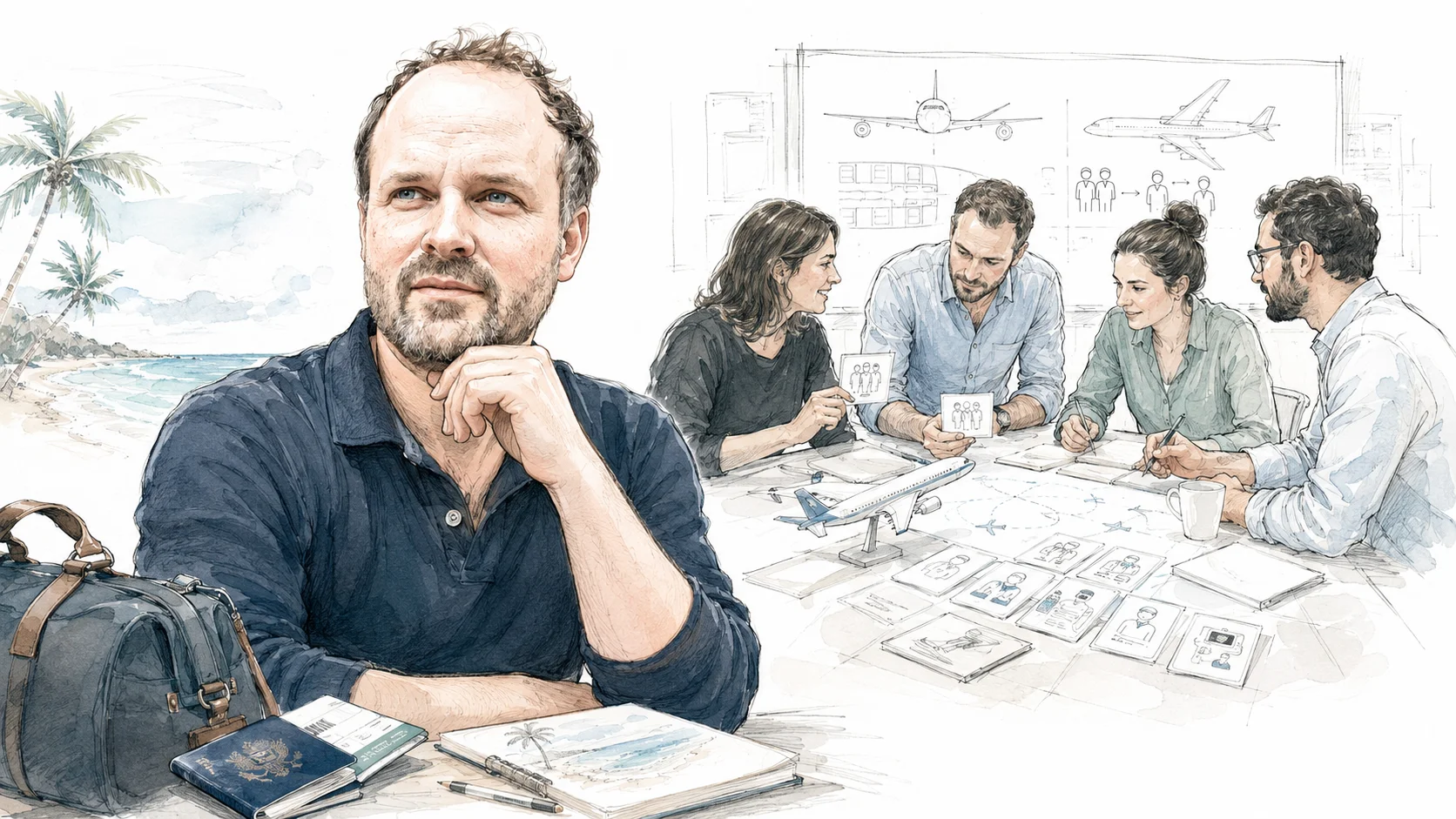
One evening, I found myself on the couch with a book about high-risk medicine. It detailed how doctors operate in critical situations, and I was captivated. But what truly impressed me was the chapter on aviation.
Back then, there were numerous aviation accidents, and the industry had to coordinate its teams in a new way. I wanted to apply these insights to my work, which led to the creation of FlightRoom—a simulation training for teams based on aviation principles.
The Fascination with Aviation
Why aviation when it comes to teamwork? Honestly, there's no compelling reason to choose this field specifically. But my interest was sparked by a book on medicine that highlighted the challenges doctors face in high-risk situations.
The aviation story within it stuck with me—the aviation industry had a real problem with accidents and had to respond.
The industry had to reinvent itself to enhance safety. Today, aviation is one of the safest industries worldwide. This never ceases to amaze me, especially considering there are far more car accidents. However, airplane accidents affect many people at once, which increased the urgency for action.
This urgency led to innovative solutions that I wanted to adapt for my work.
What fascinates me most about aviation is its systematic approach to problems. It's not just about correcting a mistake but rethinking the entire system. This mindset, deeply embedded in aviation, was something I wanted to transfer to teamwork.
Often, it's not the obvious problems that trip us up, but the underlying structures that are no longer up to date. Aviation has shown that through systematic analysis and process adjustments, one can work not only more safely but also more efficiently.
The Connection Between Aviation and Agility
It's intriguing to see how many concepts of agility actually originate from aviation. The OODA Loop, for example, is a military concept adopted by one of the founders of the agile movement, Jeff. He has written many well-known books on Scrum and has a background in military aviation.
The OODA Loop stands for Observe, Orient, Decide, Act—an iterative decision cycle originally developed for pilots to act quickly and effectively in dynamic and often life-threatening situations.
This method teaches us to process information rapidly, react flexibly, and make decisions based on current data. In the agile world, this approach helps teams continuously improve and respond swiftly to changes.
What connects aviation and agility is the ability to make clear decisions under uncertainty while always keeping the bigger picture in mind. This ability is valuable for any team working in a constantly changing environment.
It's no coincidence that many of the world's most successful companies use agile methods to manage their processes. The principles of aviation provide an excellent blueprint, which I wanted to integrate into FlightRoom.
The Turning Point: From Book to Practice
The insights from the book and aviation history led me to keep FlightRoom within the aviation context. It would have been possible to choose another theme, but aviation offers a wealth of proven strategies for improving teamwork and decision-making processes.
The decision to keep FlightRoom in this context was not only pragmatic but also inspired by the precision and high standards of aviation. I wanted to reflect these qualities in the development of FlightRoom.
It's about not only training teams but also equipping them with tools that enable continuous self-improvement.
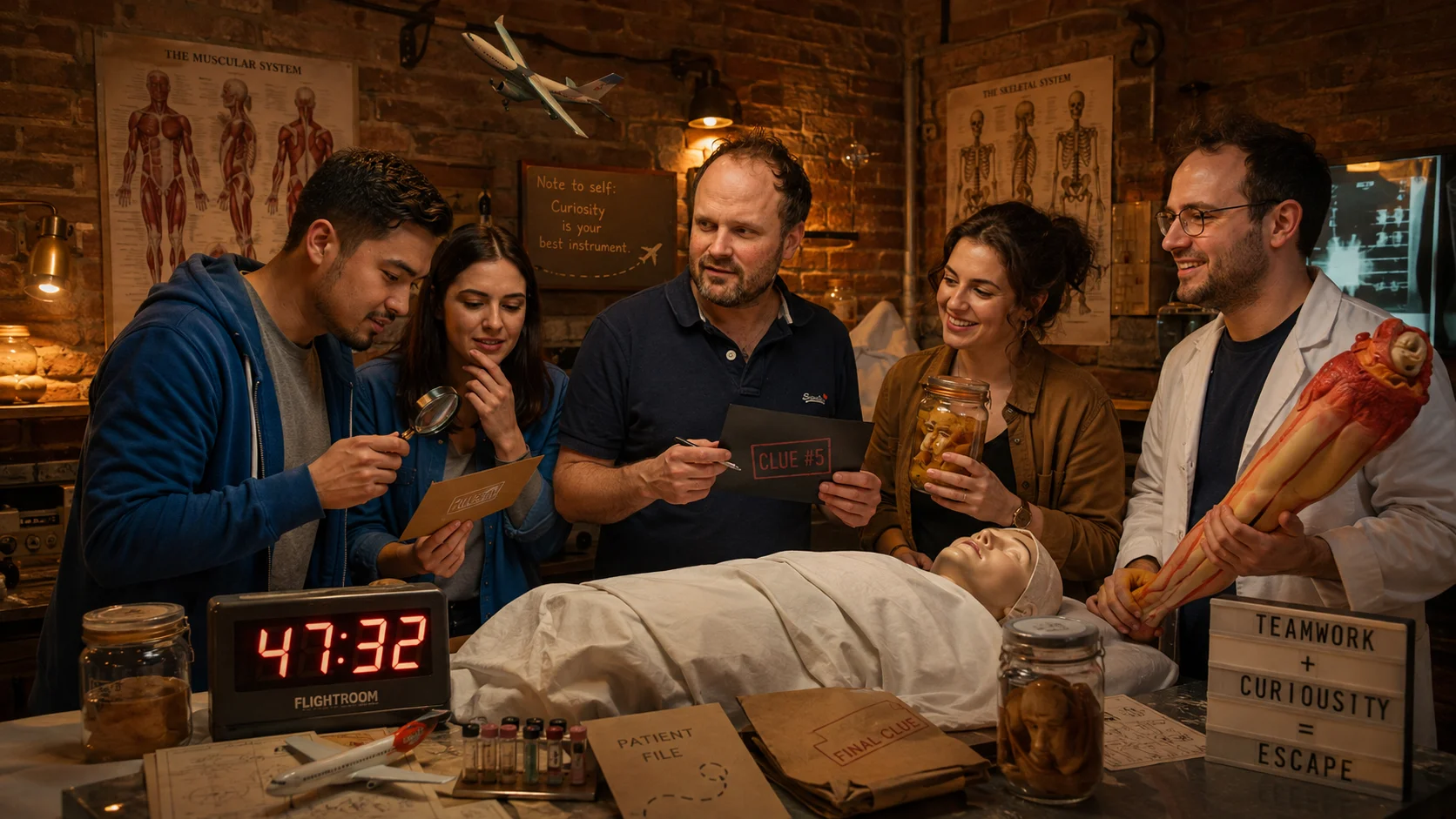
In practice, this means we train teams in realistic scenarios where they must work under time pressure and with incomplete information—just like in aviation. These scenarios help participants reflect on and optimize their communication and decision-making processes.
During the training, we observe how teams handle stress and mobilize their resources to reach a solution together.
New Self-Understanding and Motivation
FlightRoom has evolved from an idea into a comprehensive tool that helps teams improve their communication and decision-making processes under pressure. It's not just about training teams but showing them they can learn from the best practices of other industries.
For me, the self-understanding as a trainer and developer has changed. I no longer see myself merely as a conveyor of knowledge but as a bridge-builder between different disciplines.
Aviation provides an inspiring foundation to build upon and demonstrates that even the greatest challenges can be overcome if one is willing to learn from others.
The motivation behind FlightRoom lies in the belief that teams are capable of more than they often realize. Through training, participants recognize that through systematic analysis and targeted adjustments, they can significantly enhance their team dynamics and efficiency.
This realization is not only liberating but also motivating. It shows that through learning and adaptation, even the most complex challenges can be tackled.