Real Team Stories Must read
From Vacation Dream to Team Revolution: The Birth of FlightRoom
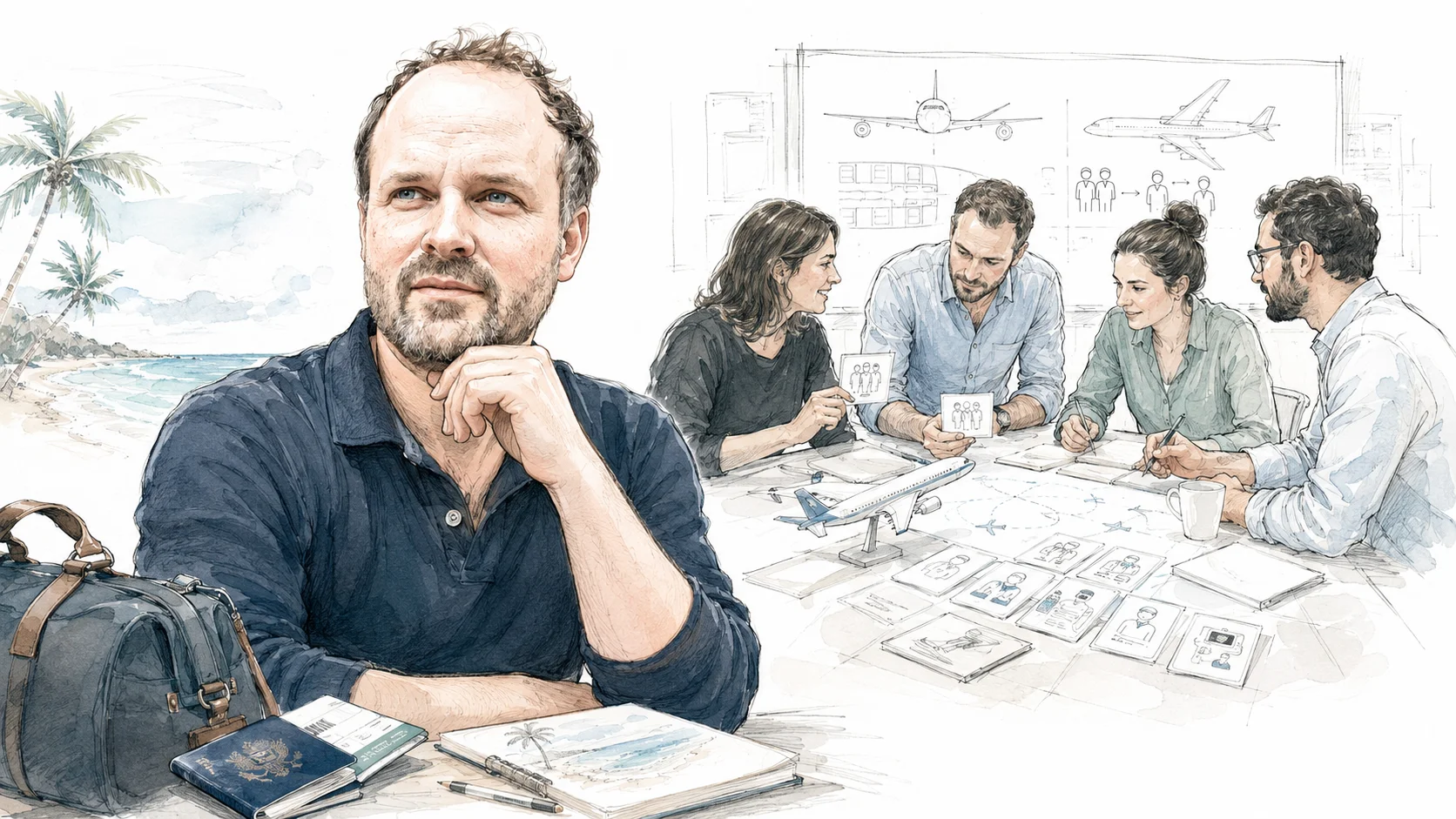
In 2017, Lucian Katzbach faced a decision: finally take the long-awaited vacation or maintain control over his company? To achieve both, he developed a role-playing game for his employees.
This led to the creation of FlightRoom, a method that helps teams communicate and make decisions efficiently under pressure.
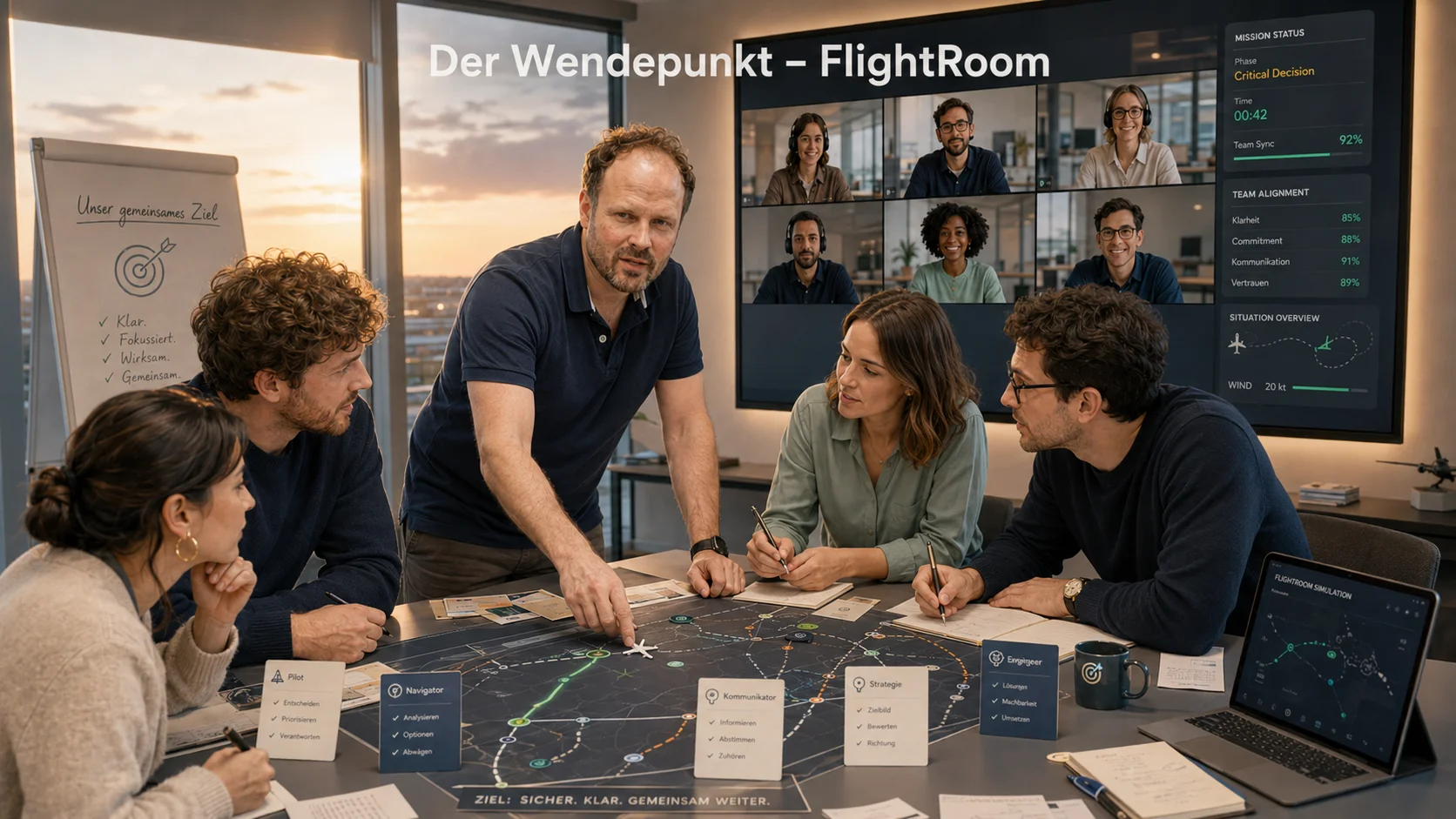 Created with AI
A Vacation Dream and the Fear of Chaos
Lucian was fully immersed in his previous company. The firm was his baby, and the thought of something going wrong during his absence gave him no peace. Yet, he longed for a break, a few weeks at a stretch without constantly thinking about work.
He wanted a team he could fully trust. Not coming home to chaos – that was his goal. To achieve this, he needed to create a system that would function even in his absence.
But how can you ensure that all the cogs of a company mesh smoothly without the boss's presence?
The thought that everything could collapse was not just an abstract concern but a very real possibility. Especially in times when business is booming, there's a high risk that small problems, if not immediately addressed, can escalate into larger crises.
Lucian wanted to ensure that his team could make the right decisions even without his direct guidance.
Inspiration from Aviation
Lucian began delving into topics where communication is a matter of life and death. Aviation and high-risk medicine were his role models. In these fields, everything hinges on the ability to communicate clearly under pressure and make quick decisions.
In aviation, for example, pilots and co-pilots must work closely together in critical situations. A mistake, no matter how small, can have catastrophic consequences. This precision and teamwork was what Lucian wanted to bring to his own company.
Why not adapt the principles from these highly sensitive areas and develop a training that similarly enhances efficiency and coordination in his team?
The idea of a role-playing game emerged: Teams should fly a troubled aircraft.
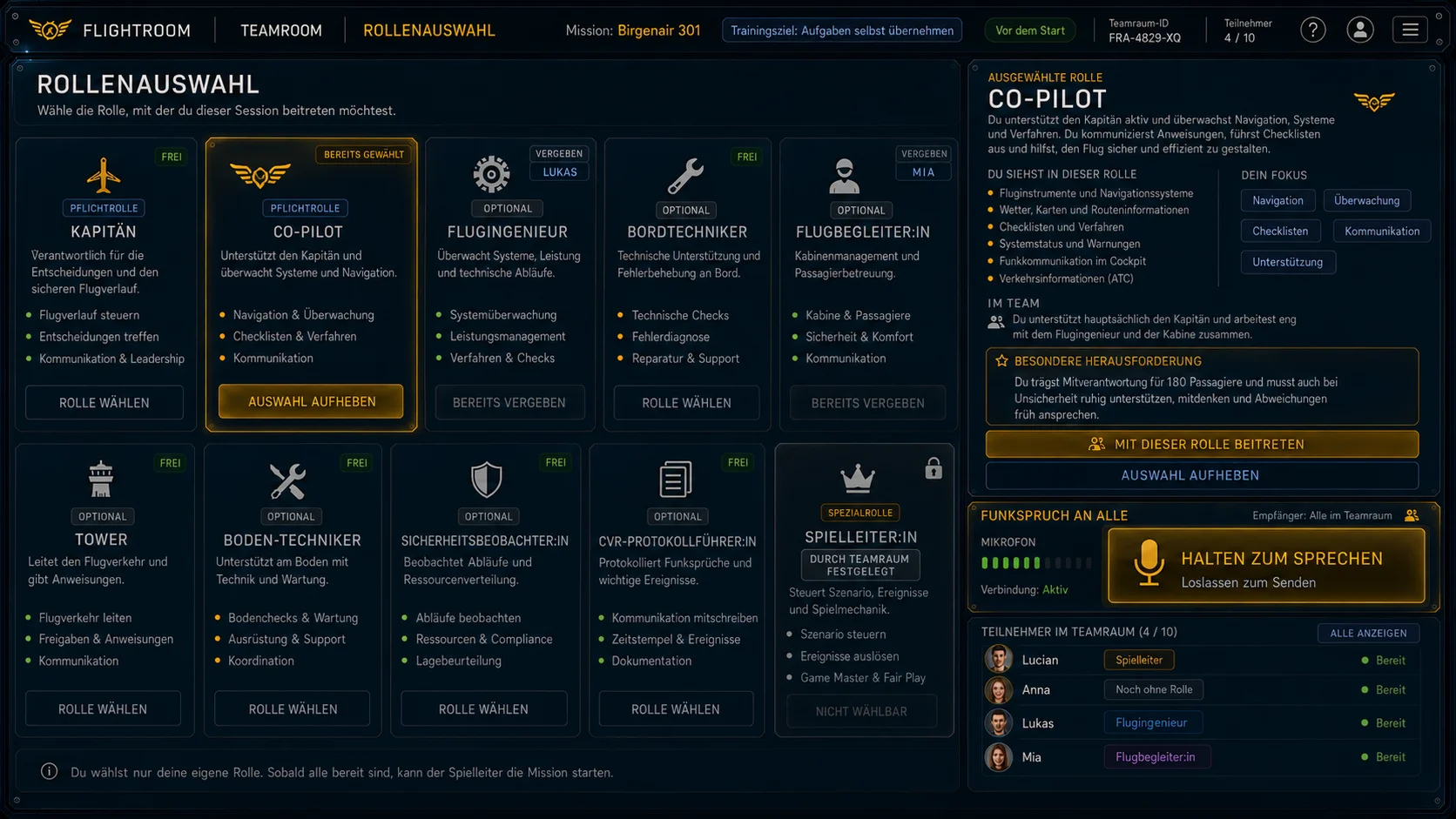
Pilots, co-pilots, technicians, and the tower – all had to work together to land the aircraft despite conflicting readings and time pressure. This role distribution requires not only technical knowledge but also trust and clear communication.
Each role has its own challenges and requires specific skills.
- Pilot: Steering and decision-maker
- Co-Pilot: Support and backup
- Technician: Solving technical problems
- Tower: Communication and coordination
But it wasn't just about developing a game. It was about creating a culture of openness and mutual trust. Everyone on the team should feel that their voice counts and that mistakes are not the end of the world but an opportunity to learn and grow.
From Prototype to Marketable Product
The initial tests with his team were a complete success. Everyone had a great time, and the idea stuck with Lucian. He recognized the potential in this role-playing game to strengthen teams beyond his own company. But how do you convince others of an idea born out of personal necessity?
Last year, he tested the prototype in the market. The results were convincing: teams measurably improved their communication and decision-making processes. The method was ready for the next level. But transitioning from an internal solution to an external product was not without challenges.
It required persuasion, patience, and trust in one's vision.
Today, it exists as a product: FlightRoom.
The market launch was a crucial step. It meant that Lucian's vision of more effective teamwork could be realized not only in his own company but also in other organizations. The response was positive, but there were also skeptical voices.
Would the principles from aviation really work in an office environment?
A New Identity as a Team Coach
FlightRoom has not only changed the way Lucian runs his company but also how he sees himself. He is now more than just an entrepreneur – he is a team coach who inspires others to collaborate in critical situations.
This new role also brought new challenges. Suddenly, he had to consider not only the needs of his own team but also those of the teams he coached.
What began as a solution to a personal conflict has evolved into a method that supports teams worldwide. Lucian had to learn that change takes time and that not every team immediately embraces his method. But the successes he witnessed motivated him to continue and constantly improve the method.
And the question remains: How can you build similar bridges in your team? How do you ensure that your team communicates efficiently and clearly even in stressful situations? Perhaps FlightRoom is the answer, or maybe it will inspire you to develop your own solution.